
10 Best Quality Management
Software for Manufacturing
From inspection-first tools to enterprise QMS platforms — a complete breakdown of the best options in 2026, including how they compare on what actually matters on the factory floor.
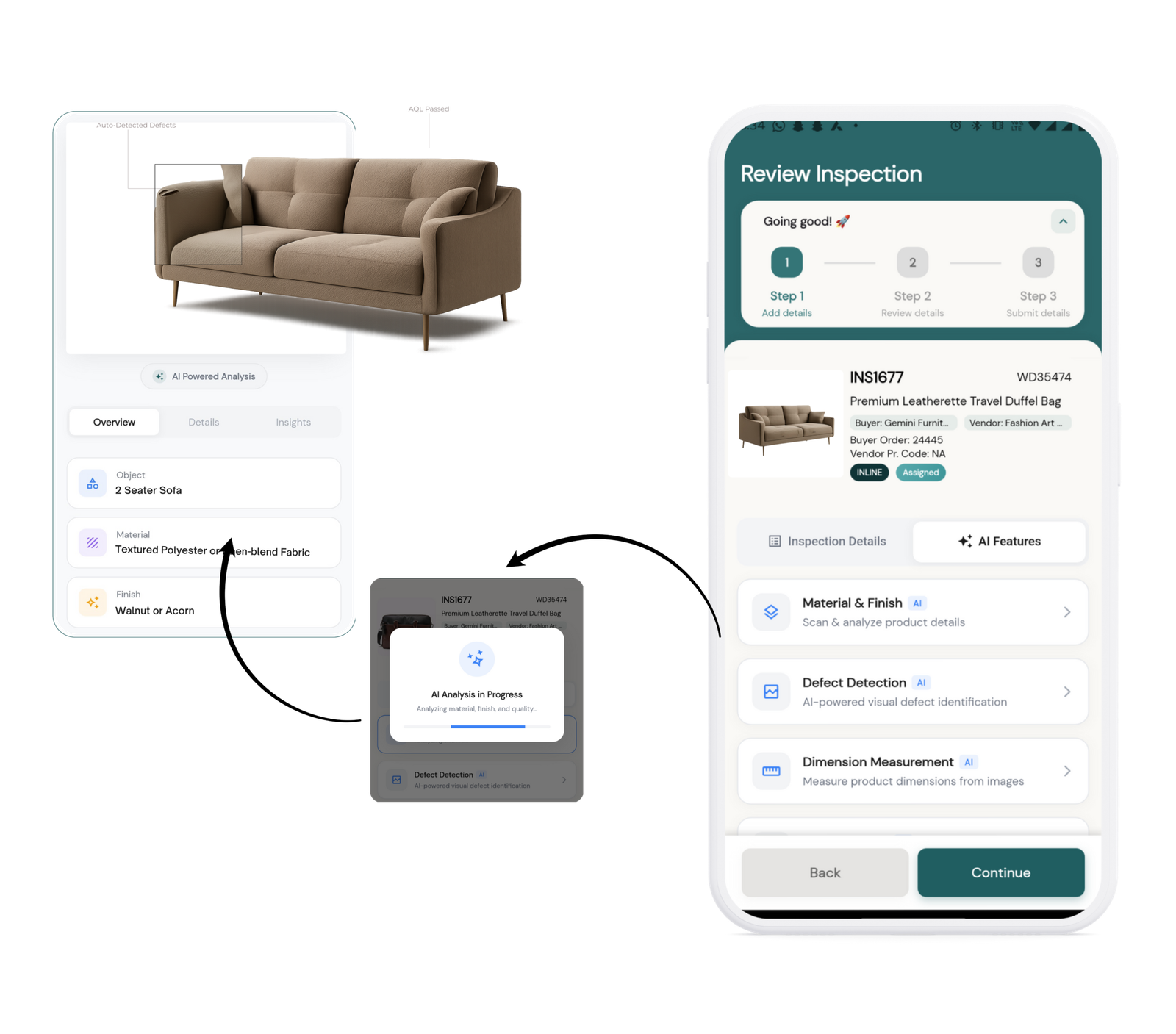
Maintaining consistent product quality is one of the biggest challenges in modern manufacturing. A single missed defect, delayed audit, or supplier non-compliance issue can lead to production slowdowns, rework costs, shipment delays, and customer complaints. In 2026, traditional QMS platforms are no longer enough — here’s what you need instead, and the 10 best tools to get there.
What is Quality Management Software for Manufacturing?
Quality management software (QMS) helps manufacturers standardize how they catch defects, manage supplier quality, run compliance audits, and close corrective actions — instead of relying on spreadsheets, email chains, and paper checklists that don’t scale past a single facility.
Core capabilities of a QMS platform
- Standardized inspection and quality workflows
- Defect and non-conformance tracking
- CAPA (corrective and preventive action) management
- Compliance audit support (ISO, CPSIA, EU REACH, and industry-specific standards)
- Centralized quality documentation
- Supplier performance monitoring
- Improve product traceability
- Generate real-time reports
Most platforms in this category fall into one of two buckets, and mixing them up is the single biggest reason manufacturers pick the wrong tool: Document-and-compliance QMS — built around document control, validation, and training records. Strongest fit for regulated industries (pharma, medical devices, aerospace) where the paperwork trail is the product. Inspection-and-execution QMS — built around what happens on the shop floor and at supplier sites in real time: checklists, defect capture, photo evidence, and instant reporting. Neither type is “better” in the abstract. The right one depends on where your actual quality risk lives — in the documentation trail, or on the floor.
Key Features to Look for in Quality Management Software
Before choosing a quality management system, make sure it covers these six capabilities:
Inspection Management
Can inspectors run digital checklists and capture defects directly on the floor, or does data entry happen later, from memory, at a desk?
CAPA Workflows
Can you track a corrective action from the moment it’s flagged through to verified closure — with an audit trail — or does it live in email?
Audit & Compliance
Does it support the specific standards you’re audited against (ISO 9001, CPSIA, EU REACH, customer-specific supplier audits)? See our compliance management software breakdown for what this should include.
Real-Time Reporting
Do managers see inspection status live, or wait for someone to compile a report?
Mobile + Offline Access
Factories and supplier sites don’t always have reliable connectivity. A tool that only works online will get bypassed the first time a signal drops.
Photo & Video Evidence
Written notes get disputed. Photo and video evidence attached to a defect report generally doesn’t.
10 Best Quality Management Software for Manufacturing in 2026
ETQ Reliance
ETQ Reliance is a highly configurable QMS built for large organizations that need to model complex, multi-site compliance workflows. It’s less a fixed product than a platform you configure to match your existing quality processes — which is a strength for enterprises with dedicated QMS administrators, and a liability for smaller teams that need something working in week one.
Key Features
- CAPA management
- Risk management
- Audit tracking
- Document control
✓ Pros
- Highly customizable
- Strong CAPA workflows
- Enterprise scalability
↗ Cons
- Complex onboarding
- Requires significant training
LookOver
LookOver is built specifically for manufacturers whose quality risk lives on the shop floor and at supplier sites — not in a documentation backlog. Instead of leading with document control, it leads with inspection execution: digital checklists, photo/video defect capture, and instant reporting that gets quality issues in front of managers the same day they happen, not the same week.
Key Features
- Offline-first inspection workflows
- Photo & video defect capture
- Real-time dashboards
- Custom digital checklists
- Supplier quality monitoring
- CAPA-ready issue tracking
- Compliance audit workflows
- Cross-device mobile access
✓ Pros
- Extremely easy to use
- Fast implementation
- Excellent for factory teams
- Strong supplier quality visibility
- Works in low-connectivity environments
↗ Cons
- Less focused on heavy document-only enterprise workflows (by design)
MasterControl
MasterControl prioritizes document control and validation above everything else. If your quality function exists primarily to satisfy FDA or equivalent regulators, this depth is the point, not a limitation.
Key Features
- Document management
- Training management
- Compliance tracking
✓ Pros
- Excellent document control
- Strong validation workflows
↗ Cons
- Expensive licensing
- Less inspection-focused
Qualio
Qualio is a cloud-first QMS with a clean interface and comparatively fast onboarding relative to legacy enterprise QMS platforms. It’s a common “first real QMS” for scaling companies.
Key Features
- Document control
- Audit management
- Training tracking
✓ Pros
- Easy interface
- Fast adoption
↗ Cons
- Limited shop-floor inspection depth
Greenlight Guru
Purpose-built for FDA-heavy compliance environments. Strong on regulatory documentation, but not suitable for general manufacturing inspection workflows.
Key Features
- Regulatory compliance workflows
- Design controls
- Risk management
✓ Pros
- Built for regulatory compliance
- Strong documentation features
↗ Cons
- Not suitable for general manufacturing
Plex Smart Manufacturing Platform
Excellent for integrated production visibility — combines ERP and QMS in one platform. Powerful, but comes with the implementation complexity and cost that entails.
Key Features
- Integrated ERP + QMS
- Real-time production insights
- Supply chain visibility
✓ Pros
- All-in-one solution
- Real-time production insights
↗ Cons
- Expensive
- Complex implementation
Arena QMS
Strong PLM integration for engineering-led businesses. Arena is ideal for managing quality across product development — less suited to physical inspection on the production floor.
Key Features
- PLM integration
- Change management
- Supplier collaboration
✓ Pros
- Strong PLM integration
- Good collaboration tools
↗ Cons
- Not focused on inspections
Intelex
Useful for enterprise safety and quality workflows. Broad scope covering environmental, health, safety, and quality — but that breadth adds significant weight and complexity.
Key Features
- EHS management
- Incident tracking
- Reporting & analytics
✓ Pros
- Comprehensive system
- Good reporting tools
↗ Cons
- Heavy and complex
SAP Quality Management
A strong option if your entire stack already runs on SAP. The QM module integrates directly and provides enterprise-grade quality control within that ecosystem.
Key Features
- SAP ERP integration
- Quality notifications
- Inspection lot management
✓ Pros
- Seamless SAP integration
- Enterprise-grade solution
↗ Cons
- Requires full SAP environment
- Very high cost
Autodesk Fusion Manage
Better for product lifecycle and change workflows. Autodesk brings workflow automation and PLM tools into the QMS space — strong for engineering-led organisations, less so for production-floor inspection.
Key Features
- Workflow automation
- PLM integration
- Custom workflows
✓ Pros
- Strong engineering integration
- Custom workflows
↗ Cons
- Not inspection-focused
LookOver vs Traditional QMS Tools
While most tools above focus on compliance and documentation, Lookover is built for execution on the ground. This aligns with LookOver’s core promise: quality control inspection software combined with compliance workflows.
| Feature | Traditional QMS | Lookover |
|---|---|---|
| Core focus | Documentation | Inspection execution |
| Mobile-first | Limited | Yes — native app |
| Offline support | Rare | Yes — offline-first |
| Photo & video evidence | Limited | Yes |
| Setup speed | Slow | Fast |
| Supplier inspections | Moderate | Strong |
| Ease of use | Complex | Simple |
| Factory floor optimised | No | Yes |
Why Traditional QMS Fails on the Shop Floor
Many legacy systems fail because they are built for office teams, not factory teams. The gap between what the software captures and what happens on the floor keeps widening.
Too much documentation — forms designed for auditors, not inspectors
Slow interfaces — desktop-first systems that aren’t built for speed
No offline capability — factory floors and remote sites are left uncovered
Delayed issue reporting — by the time managers see it, production is already impacted
Weak supplier collaboration — no shared visibility between brand and factory teams
Hard-to-use audit workflows — complex systems that field teams avoid or work around
The compounding cost is delayed defect resolution: by the time an issue surfaces in a weekly report, rework is underway, a batch has shipped, or a customer has already complained.
Why Manufacturers Are Switching to Inspection-First Tools
Faster Defect Visibility
Issues flagged on the floor in real time — not discovered days later
Digital Evidence
Photo and video proof attached to every defect report automatically
Supplier Accountability
Quality history built per supplier — patterns visible, corrective actions tracked
Real-Time Dashboards
Managers see live inspection status without waiting for manual reports
Faster CAPA Closure
Issues assigned, tracked, and resolved in-app — no email chains
Field-Friendly Apps
Mobile-first tools that inspectors actually use — even without signal
“Quality management is no longer just about documentation — it’s about capturing quality where it actually happens, in real time, at the source.”
How to Choose the Right Quality Management Software
The right tool depends entirely on where your quality risk actually sits — conflating the two categories below is the most common (and most expensive) buying mistake.
🔍Choose Lookover if you need…
- Real-time inspection tracking
- Offline factory or supplier audits
- Supplier quality workflows
- Compliance audit trails
- Photo-based defect capture
- Simple, fast implementation
📋Choose traditional QMS if you need…
- Heavy compliance documentation
- Strict regulatory validation (pharma, medtech)
- Enterprise process automation
- Deep training documentation
- Full SAP/ERP integration
Final Thoughts
The best QMS for your business isn’t the one with the longest feature list — it’s the one built for where your quality risk actually lives. If that’s documentation and regulatory validation, a platform like MasterControl or ETQ Reliance will serve you better. If it’s the shop floor, supplier sites, and the gap between when a defect happens and when someone finds out, an inspection-first platform like LookOver is built specifically to close that gap — with offline support, photo evidence, and real-time visibility across every facility and supplier you work with. Book a free demo to see how it fits your inspection workflow, or explore the full feature list.