
Quality Inspection Software Built for Real Manufacturing Problems: From Furniture to Textiles
Manufacturing quality breaks down in predictable ways. Inspections get rushed. Data ends up scattered across paper forms, spreadsheets, and personal devices. By the time a defect trend is visible, the shipment is already at risk. This is not a tooling problem alone—it’s a system problem.
That’s why modern manufacturers are moving toward quality inspection software designed around actual production environments, not abstract workflows. The goal is simple: make quality data reliable, accessible, and usable before issues escalate.
Why Generic Quality Inspection Tools Fail on the Factory Floor
Many digital quality tools promise standardisation but struggle in real-world manufacturing conditions. They assume:
- Stable internet connectivity
- Uniform products
- Identical inspection logic across industries
In practice, manufacturing environments are far more complex.
A furniture factory evaluating joinery strength and surface finish operates very differently from a textile mill tracking stitch density or colour variation. Handicraft production adds another layer—manual processes, visual judgement, and natural variation are inherent.
When inspection software cannot adapt to these realities, teams resort to spreadsheets, paper notes, or informal workarounds. That defeats the purpose of digitisation.
Industry-specific quality inspection software solves this by letting inspection logic follow the product and process—not the other way around.
Furniture Manufacturing: Balancing Visual Quality and Structural Accuracy
In furniture production, quality is both visual and structural. Surface finish, edge alignment, polish uniformity, and joint strength all need to be evaluated, often in quick succession.
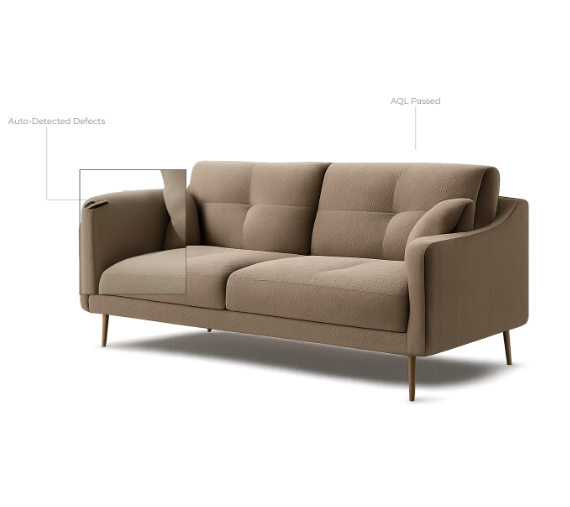
Quality inspection software for furniture manufacturing supports this by:
- Capturing images of visible defects
- Recording dimensional measurements against tolerances
- Tagging defects with clear categories
The result is evidence-backed inspection data that can be reviewed remotely by supervisors or shared with vendors. This approach reduces disputes.
Offline Inspections and Data Integrity
Connectivity is not guaranteed on every factory floor or warehouse. Offline inspection capability is not a convenience; it’s a requirement.
Technically, this works through local data caching on the inspection device. Inspections are stored securely until connectivity is restored, then synced automatically to the central system. The key constraint is conflict resolution—well-built systems manage version control to prevent duplicate or overwritten records.
For manufacturers operating across multiple sites, this ensures inspection continuity without compromising data integrity.
Handicrafts: When Quality Is Subjective, Documentation Is a Requirement
Handcrafted products introduce a different challenge. Variations are expected, but quality still needs boundaries.
Quality inspection software for Handicraft production focuses heavily on visual documentation and checklist flexibility. Inspectors can define qualitative checkpoints, attach multiple images, and record notes that explain context rather than forcing binary pass/fail decisions.
Over time, this creates a visual quality baseline that helps align artisans, quality teams, and buyers—even when products aren’t identical.
Textile Manufacturing: Turning Defects into Process Intelligence
In textile manufacturing, recurring defects often trace back to machines, processes, or shifts rather than individual products.
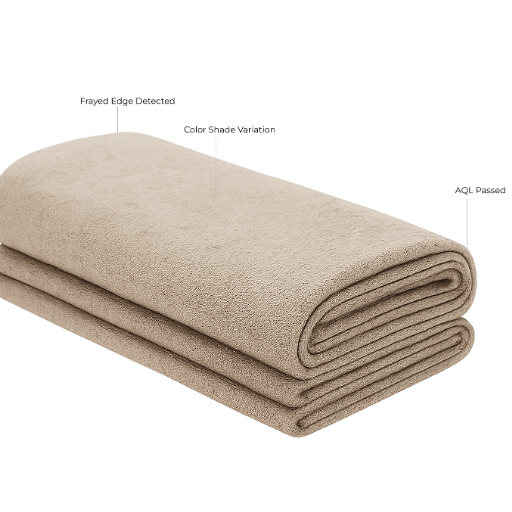
Quality inspection software for textile industry environments captures defect type, location, and frequency. When aggregated, this data reveals patterns—specific looms causing repeated issues, or colour deviations tied to particular dye lots.
This is where inspection data becomes operational intelligence rather than compliance paperwork.
Lookover Quality Inspection Software: Built for Industry Reality
Lookover is built around this industry-specific reality. Rather than forcing manufacturers into a single inspection model, its platform supports adaptable workflows while keeping inspection data consistent and usable.
Key Features of Lookover
Customizable Digital Checklists
Inspection checklists can be configured by product type, buyer requirement, or production stage. Mandatory checkpoints, defect categories, and tolerance limits can be defined upfront; this provides crisp inspections that follow a repeatable structure.
Photo and Evidence Capture
Inspectors can drop images directly to inspection points. This can be really useful in furniture and handicraft inspections, where visual clarity reduces disputes and speeds up internal reviews.
Offline Inspection with Automatic Sync
Lookover supports offline inspections, storing data securely on the device and syncing automatically when connectivity is restored. This prevents inspection gaps in low-network environments without disrupting shop-floor workflows
Standardised Data Collection
All inspections go by a structured format, which reduces inspector-to-inspector variations. This consistency makes defects in any data comparable across batches, suppliers, and facilities.
Centralised Reports and Dashboards
Inspection data flows into a centralised system where managers can track defect trends, identify issues that are repeating, and monitor to take corrective measures. This transforms inspection data into decision-support information.
From Inspection Records to Operational Insight
The real value of inspection software appears after data collection. Centralised dashboards give teams the ability to move beyond just pass/fail reporting. This lets them get the clarity on patterns—recurring defects, supplier-related issues, or process weaknesses.
Platforms like Lookover are designed with these requirements in mind, supporting varied industries from furniture and textiles to handicrafts. The secret to how we are doing all that is that we don’t force a single inspection model across all use cases.
Final Perspective
Quality inspection doesn’t fail because teams don’t care. It fails when systems can’t keep up with production realities. Industry-aware inspection software closes that gap by making quality data consistent, visible, and actionable.
For manufacturers serious about reducing defects and improving accountability, we are here to ensure that you have the right quality inspection software. We do not just offer a tool but the entire infrastructure.